
Bhutan Beyond the Postcard: My Journey Through the Kingdom of Happiness
A First-Hand Travel Story by Parul Kesari | Safari Plus
Destinations Covered - Phuentsholing • Thimphu • Punakha • Paro | Bhutan FAM Trip 2026
There are destinations you visit, destinations you photograph, and then there are destinations that quietly change the way you look at life. Bhutan was the third kind for me.
From 12–17 August 2026, I travelled through Bhutan as part of an educational Bhutan FAM Trip organised by Time Traveller Holiday Experts (DMC Northeast), supported by Vyom.One and Travel Heels, with Safari Plus as the Media Partner. I experienced Bhutan not merely as a tourist, but from the perspective of a travel professional—understanding the destination, its attractions, road connectivity, immigration process, hotels, experiences and, most importantly, how we can present Bhutan to Indian travellers.
What began from Mumbai and took us towards Siliguri/Bagdogra and Jaigaon, eventually led us across the border into Bhutan. What followed was a fascinating journey through Phuentsholing, Thimphu, Punakha and Paro—four destinations, four different personalities, and countless stories.
Bhutan: More Than a Destination
Before this journey, Bhutan was familiar to me through photographs—the monasteries perched on mountains, prayer flags fluttering in the wind, green valleys and the iconic Tiger's Nest.
But travelling through Bhutan made me realise that its real attraction is something that cannot be captured completely in a photograph.
It is the pace of life.
It is the silence between two mountain roads.
It is the respect people show towards each other.
It is the absence of unnecessary hurry.
It is the simplicity of everyday life.
For someone from Mumbai, where traffic, deadlines, phone calls and constant movement are part of everyday existence, Bhutan offers a striking contrast. And perhaps that is exactly why the destination resonates so strongly with travellers today. We are all searching for something—peace for the soul amidst the hustle and bustle of life. Bhutan seems to understand that search.
Mumbai to Siliguri: When the Journey Becomes Part of the Destination
Our Bhutan adventure started from Mumbai, taking us towards Siliguri/Bagdogra, the practical gateway for this road journey into Bhutan. For Indian travellers, understanding this route is important, particularly for those considering a Bhutan road trip from India.
The route takes travellers towards Jaigaon, the Indian border town, from where one crosses into Phuentsholing, Bhutan's gateway by road.
Phuentsholing: The Moment Bhutan Begins
Phuentsholing is where the Bhutan experience begins for travellers entering by road from India. The fascinating part was not simply crossing an international border—it was the visible change in atmosphere once we entered Bhutan.
The roads, mountains, greenery and overall pace immediately created a different feeling. This is also where travellers complete the required immigration formalities, making Phuentsholing an important operational point for travel agents planning road-based Bhutan packages.
For me, Phuentsholing was more than an overnight halt. It was the doorway between two worlds.
And beyond that doorway was the road to Thimphu.
Milarepa Temple: A Spiritual Beginning
One of our early experiences was a visit to Milarepa Temple, offering an introduction to Bhutan's deep Buddhist heritage. The temple and its surroundings provided a peaceful beginning to our Bhutan exploration. What struck me was how spirituality in Bhutan does not feel separated from everyday life. Monasteries, temples, prayer flags, stupas and Buddhist symbols are woven naturally into the landscape.
For travellers interested in spiritual tourism, Buddhist culture and Himalayan heritage, experiences like this add considerable depth to a Bhutan itinerary.
Gedu: Discovering the 8 Types of Stupa
Our journey also took us through Gedu, where we explored the fascinating representation of different types of Buddhist stupas.
For a traveller, a stupa may initially appear to be simply a beautiful religious structure. But once you begin understanding the symbolism, architecture and spiritual significance behind these monuments, the experience becomes much richer.
This was another reminder that Bhutan is a destination best experienced with curiosity.
The Confluence of the Rivers: Where Nature Creates Its Own Story
One of the memorable landscape experiences was witnessing the confluence of the Paro and Thimphu rivers. There is something fascinating about watching two rivers come together. It is simple, natural and yet deeply symbolic. Standing there, I found myself thinking about how travel brings different people, cultures and experiences together—much like rivers finding a common path. It was one of those quiet moments that stays with you.
Thimphu: Discovering the Heart of Bhutan
From Phuentsholing, the journey continued towards Thimphu, Bhutan's capital.
It is a capital city, yet it doesn't feel like the capitals most of us know. There is no overwhelming urban chaos. Instead, traditional Bhutanese architecture, mountains, monasteries, government buildings, local markets and modern life coexist naturally. Thimphu sightseeing offers an excellent mix of culture, heritage, spirituality, wildlife, shopping and local experiences.
Buddha Dordenma: A Giant Symbol of Peace
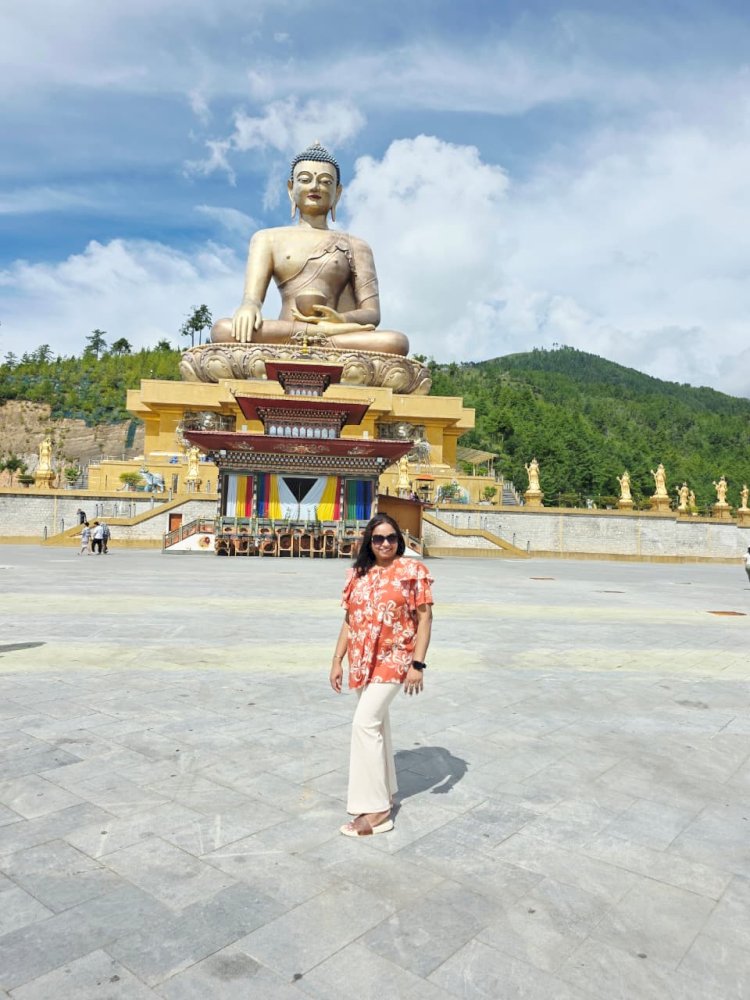
High above Thimphu stands the magnificent Buddha Dordenma Statue, one of the city's most recognisable landmarks. The enormous golden Buddha overlooking the valley creates an immediate sense of scale and serenity. But for me, the most memorable aspect was the view. Looking across Thimphu from this elevated location, the city appears beautifully enclosed by mountains. It is both a sightseeing attraction and a spiritual experience—and an excellent introduction to Bhutan's Buddhist identity.
Takin Preserve: Meet Bhutan's National Animal
One of my most interesting experiences in Thimphu was visiting the Motithang Takin Preserve, a peaceful sanctuary nestled among the pine forests of the valley and dedicated to Bhutan’s national animal—the takin.
According to local folklore, the takin was created by Lama Drukpa Kunley, the “Divine Madman,” by joining the head of a goat with the body of a cow.
What touched me most about the preserve was its connection with Bhutan’s philosophy of respecting nature and living beings. The site was originally a small zoo, but the animals were later released because keeping them in captivity was considered inconsistent with Bhutan’s Buddhist and environmental values.
Simply Bhutan: Where Culture Comes Alive
Simply Bhutan was one of my favourite cultural experiences in Thimphu because it presents Bhutanese traditions in an engaging and accessible manner. Here, travellers can experience elements of traditional Bhutanese lifestyle, architecture, food, clothing, music and customs.
It is particularly useful for first-time visitors because it brings several aspects of Bhutanese culture together in one experience.
For me, it reinforced an important thought: You cannot truly understand Bhutan by simply looking at it—you have to experience its culture.
Craft Bazaar: Bringing Bhutan Home
No destination experience is complete without discovering its local craftsmanship. At Thimphu's Craft Bazaar, we explored traditional handicrafts, textiles and locally created products. Shopping here is not simply about buying souvenirs. It is an opportunity to take home a small piece of Bhutanese culture and support local artisans.
For travel agents, adding such experiences to an itinerary can make a Bhutan holiday more personal and memorable.
Punakha: Where Mountains, Rivers and History Meet
If Thimphu introduced me to Bhutan's culture, Punakha introduced me to its breathtaking landscape. The journey from Thimphu to Punakha is an experience in itself, particularly when travelling through Dochula Pass. The landscape changes, the mountains open up and suddenly the journey feels like a cinematic Himalayan road trip. Punakha is one of those destinations where nature and heritage seem to have been designed together.
Dochula Pass: A Himalayan Viewpoint
Our journey to Punakha took us through Dochula Pass, one of Bhutan's most scenic mountain stops. The location is known for its 108 Druk Wangyal Chortens, set against a dramatic Himalayan landscape. On a clear day, the mountain views are spectacular. But Dochula is more than a photography stop. It is a place where travellers can pause, breathe in the mountain air and experience Bhutan's distinctive combination of spirituality and nature.
Chimi Lhakhang: Bhutan's Famous Fertility Temple
Then came one of the most unusual and intriguing experiences of the trip—Chimi Lhakhang, popularly known as Bhutan's Fertility Temple. The temple is associated with Lama Drukpa Kunley, popularly known as the Divine Madman, a colourful and unconventional figure in Bhutanese Buddhist history.
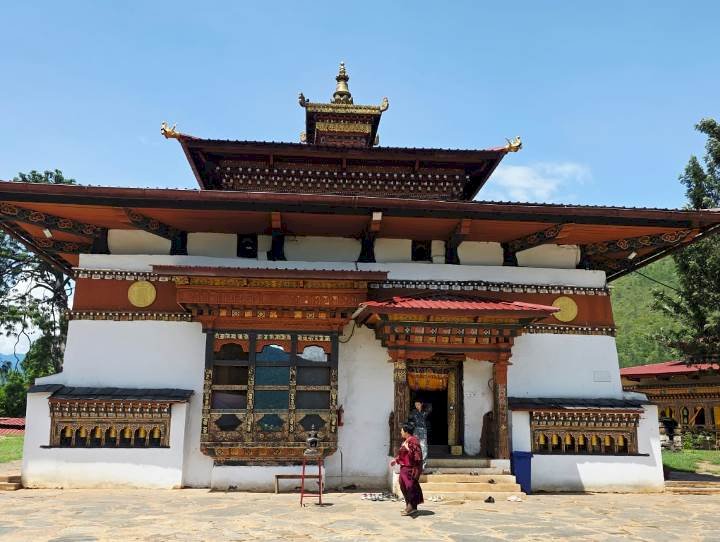
What makes the experience interesting is not only the temple itself but the journey through traditional villages and beautiful countryside to reach it.
The stories, folklore and beliefs surrounding Drukpa Kunley make Chimi Lhakhang very different from conventional religious attractions. The temple is particularly associated with fertility blessings, and visitors come here seeking blessings and experiencing the traditions connected with this unique cultural site.
Punakha Dzong: Bhutan's Architectural Masterpiece
And then we arrived at Punakha Dzong. This was one of the moments when Bhutan seemed to pause. The magnificent dzong stands at the confluence of the Pho Chhu and Mo Chhu rivers, surrounded by mountains and lush landscapes. Its traditional Bhutanese architecture, intricate woodwork, colourful details and imposing structure make it one of the country's most celebrated landmarks. Walking through its courtyards, I could feel the layers of history, spirituality and craftsmanship. This is not simply a monument to photograph.
It is a place to walk through, observe and absorb. Punakha Dzong perfectly represents what makes Bhutan so special—the coming together of architecture, religion, history, rivers and mountains in one extraordinary setting.
Punakha Suspension Bridge: A Little Adventure
The Punakha Suspension Bridge added an element of adventure to our journey. Decorated with colourful prayer flags and stretching across the river, the bridge offers spectacular views of the surrounding landscape. Walking across it is both exciting and peaceful. It adds a fun experiential element to a Punakha itinerary. And, naturally, it is also one of those places where everyone's camera comes out!
Zhingkham Resort View: Punakha at Its Most Picturesque
One of the most beautiful views we experienced in Punakha was from Zhingkham Resort. We did not stay there, but the viewpoint offered a stunning perspective of the valley, with the magnificent Punakha Dzong visible against the Himalayan landscape and the Pho Chhu River flowing gracefully through the valley.
It was one of those frames where everything seemed perfectly placed—mountains, river, heritage and greenery. Punakha truly knows how to create a postcard.
Paro: Where Bhutan's Soul Reveals Itself
Our journey eventually brought us to Paro, perhaps the most recognisable name on the Bhutan tourism map. Paro is where many travellers first encounter Bhutan through its iconic airport and where some of the country's most famous attractions are located. But Paro is much more than the Tiger's Nest.
It is a valley of traditional architecture, monasteries, museums, rivers and mountain landscapes.
National Museum: Bhutan Through Its Heritage
The National Museum of Bhutan, housed in the historic Ta Dzong, offered us an opportunity to explore the country's cultural and artistic heritage. Through traditional objects, religious artefacts, artworks and historical exhibits, visitors can understand the layers of Bhutanese culture. This visit added context to the architecture and traditions we had already experienced throughout the journey. It also
Rinpung Dzong: Architecture with a Story
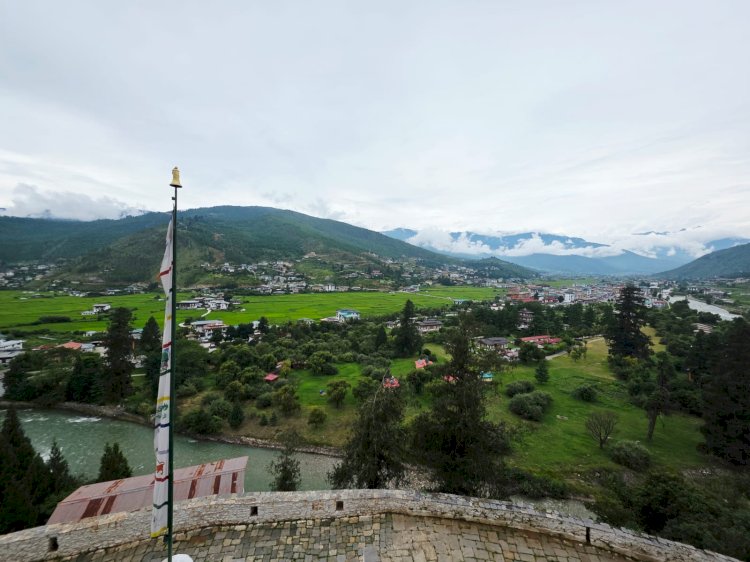
Rinpung Dzong is another remarkable example of Bhutanese architecture. Standing above the Paro valley, the fortress-monastery combines impressive architecture with Bhutan's dramatic mountain scenery. Its traditional woodwork, large courtyards and richly detailed interiors showcase the country's extraordinary craftsmanship. Standing there, I found myself looking beyond the building itself. Every wall, beam and artistic detail seemed to carry a story of Bhutan's spiritual and cultural heritage.
Tiger's Nest Viewpoint: The Icon of Bhutan
And then came the moment every Bhutan itinerary seems to build towards—the Tiger's Nest. Perched dramatically on a cliff above the Paro valley, Paro Taktsang is perhaps the image most closely associated with Bhutan. We experienced the Tiger's Nest viewpoint, which provides an unforgettable perspective of the monastery and the mountains surrounding it. Even without undertaking the complete hike, standing at the viewpoint and seeing the monastery seemingly carved into the mountainside was extraordinary.
For adventurous travellers, the full hike to Tiger's Nest becomes a major Bhutan experience. For others, the viewpoint itself provides an opportunity to appreciate its extraordinary setting.
Paro River: The Quiet Side of Travel
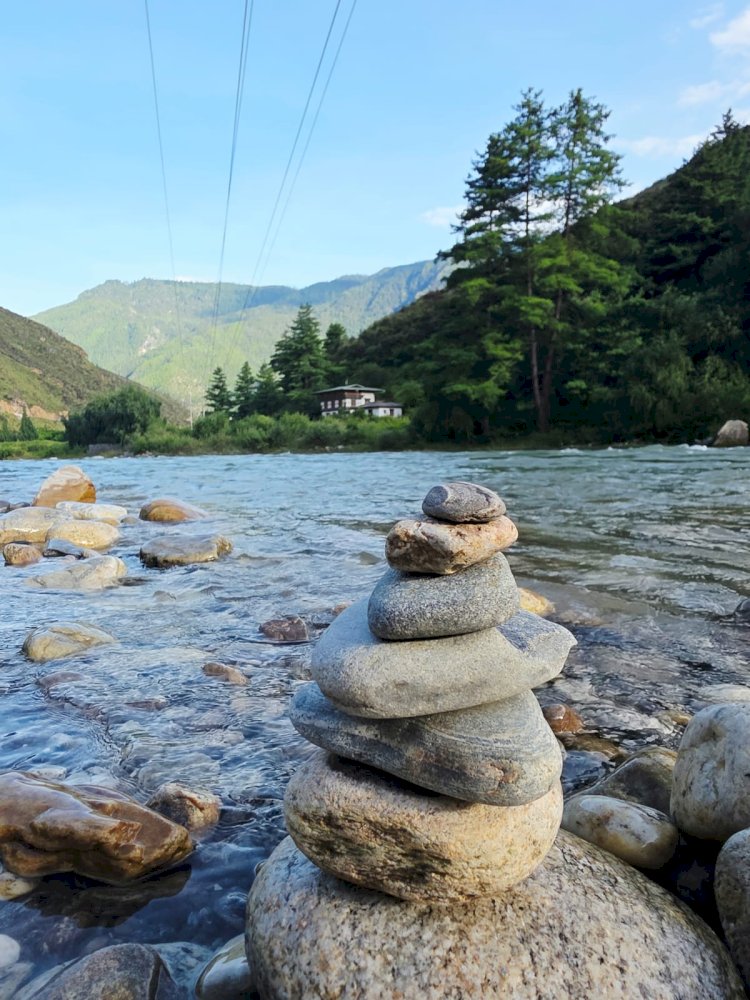
Our stop beside the Paro River was much quieter. And perhaps that is why I remember it. After visiting dzongs, museums and viewpoints, standing beside the river offered time to simply observe. The flowing water, mountains, greenery and peaceful valley created the kind of atmosphere that makes Bhutan so different from many other destinations. Sometimes travel isn't about the next attraction. Sometimes it is about stopping long enough to feel where you are.
Paro Market, Square & Clock Tower — A Shopper’s Delight
A stroll through Paro’s charming market and town square is a wonderful way to experience the local vibe while picking up something special to take home. The traditional Bhutanese shopfronts are filled with handcrafted souvenirs, colourful textiles, wooden handicrafts, Buddhist-inspired art, masks, incense and locally made products—perfect for finding a meaningful keepsake rather than an ordinary souvenir.
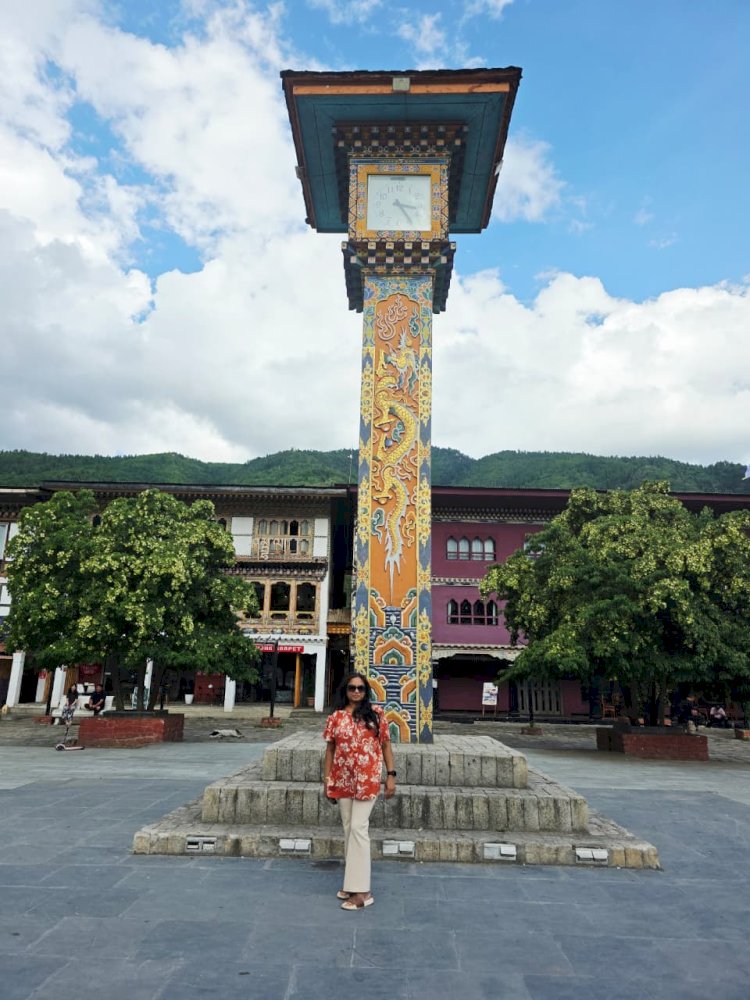
And as you explore the lively streets around the square, the iconic Clock Tower adds to the charm, making the experience a lovely combination of shopping, photography, local culture and leisurely exploration. Because the best souvenirs are not just things you bring back—they are memories of the place you discovered them. ❤️
❤️ What Bhutan Taught Me
If I had to bring back one lesson from Bhutan, it would be this:
We are constantly searching for peace in a life filled with hustle and bustle, yet sometimes peace comes from simply choosing a simpler way of living.
What struck me throughout the journey was the calmness of everyday life. There seemed to be less urgency, less unnecessary noise and a visible sense of respect for fellow human beings.
Even something as simple as road behaviour creates a different impression. There was no feeling of the constant rush we are accustomed to in large Indian cities.
And the change was noticeable almost immediately after crossing the border.
It made me realise that development and modernity do not necessarily have to mean losing simplicity.
Bhutan has found its own rhythm.
And perhaps that is its greatest luxury.
✈️ What I Learned as a Travel Professional
This FAM trip was not just about sightseeing for me.
It was an educational journey.
Travelling the route personally gave me a much clearer understanding of how Indian travel agents can plan Bhutan packages by road, particularly using Bagdogra Airport or Siliguri Railway Station as access points, travelling towards Jaigaon and crossing into Phuentsholing.
Important Travel Note: Indian travellers can stay in Bhutan for up to 24 hours without paying the Sustainable Development Fee (SDF). This can be a useful point for travel professionals while planning short transit or border-area itineraries.
Experiencing the immigration process, road journeys, sightseeing, cultural attractions and destination flow first-hand helps a travel professional recommend Bhutan with greater confidence.
It also showed me that Bhutan can cater to very different traveller profiles:
- Family holidays
- Cultural and heritage tourism
- Spiritual journeys
- Nature and wellness escapes
- Adventure travel
- Photography tours
- Experiential holidays
- Leisure and slow travel
- Travel trade and educational groups
The biggest takeaway? - Don't sell Bhutan as just a sightseeing destination. Sell the experience of Bhutan.
The Journey Ends, But the Learning Continues
Our six-day journey eventually brought us back towards Phuentsholing and onward to Bagdogra/NJP, marking the end of the FAM. But every journey leaves something behind. In my case, it was not just hundreds of photographs, videos and stories. It was a renewed understanding of what travel can do to us. Travel teaches us about places, people and cultures—but the wisest lesson is what we carry back into our own lives.
To travel is to learn.
To learn is to evolve.
And to evolve is to become a better version of ourselves tomorrow.
Bhutan gave me beautiful memories, valuable destination knowledge and a few quiet lessons about life.
And perhaps that is why, even after returning home, a little part of me is still somewhere between the mountains, rivers and prayer flags of Bhutan.

























/hospibuz/media/media_files/2026/04/02/sing-malay-phil-india-cam-kv-sale-deluxe-15-4-4-2026-04-02-13-39-48.jpg)